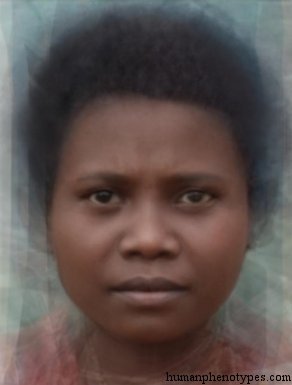
Very ancient South Asian type that probably arrived with an early Out-of-Africa migration via oceanic routes. Negritids are very short, males often below 150 cm, and have dark brown to black skin, kinky hair, and relatively short skulls. In difference to African Pygmies, Negritids show adultiform proportions, e.g. no abnormally short legs. Facial features are usually more gracile, noses not very wide. Was pushed back by later migrations of Veddids and Mongoloids, and survives only in small numbers scattered across several remote locations. Until 1857, the Andamanids (North Andamanid, South Andamanid) lived extremely isolated. After contact, populations rapidly collapsed due to disease. In the Philippines, an Aetid variety exists, in the Malayan peninsula a Semangid variety, both still survive in the rainforests. Deforestation, loss of culture, and disease could soon wipe out these unique people.
Physical Traits
Height: Very short (males often below 150 cm)Build: Adultiform proportionsSkull: Relatively shortFace: Gracile featuresNose: Not very wideSkin: Dark brown to blackHair: KinkyLegs: Normal proportions (unlike African Pygmies)
The Negritid type represents one of the most ancient human populations in South Asia, likely arriving through early oceanic migration routes from Africa. The stature is notably very short, with males frequently measuring below 150 cm. The skin ranges from dark brown to black, with kinky hair texture. The skull is relatively short (brachycephalic tendency). A key distinguishing feature from African Pygmies is the presence of adultiform body proportions - Negritids do not have abnormally short legs. Facial features tend to be more gracile (delicate) compared to other dark-skinned populations, with noses that are not particularly wide.
Geographic Distribution
Distribution map circa 1500 CE. Yellow: common, Dark yellow: occasional, Black: rare
Negritids were pushed back by later migrations and survive only in small, scattered populations in remote locations. The Andaman Islands (Andamanids), Philippines (Aetid variety), and Malayan peninsula (Semangid variety) host the remaining populations. These groups face severe threats from deforestation, disease, and cultural loss.
Literature References
The Negritid type has been described under various names in anthropological literature: