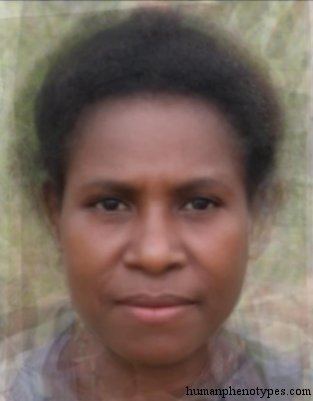
Description
Melanesid subtype of New Guinea. Found especially in lowlands and river plains, with its highest concentration in the south of the island. More common in Papuan speakers. Also in the Torres Strait, Ceram, Halmahera, East Flores, Aru, and North Australia. Has recently been pushed into minority status in Western New Guinea.
Historical Context
This type represents lowland Melanesian populations who adapted to riverine and coastal plain environments. The finer features compared to mountain varieties may reflect different selective pressures in lowland tropical environments. Recent population movements and colonization have significantly altered the demographic distribution of this type.
Physical Traits
Height: Variable, often medium-tall
Build: Ectomorph to mesomorph
Limbs: Brachyskelic, long arms
Skull: Mesocephalic to dolichocephalic, mildly hypsicranic
Face: Finer features than Mountain Melanesids
Nose: Mildly platyrrhine or mesorrhine, long, high-rooted, convex, fleshy
Skin: Dark brown, sometimes medium brown
Hair: Tight-curly, red or blonde in rare cases
Body hair: Moderate
Dark brown, sometimes medium brown skin with tight-curly hair that is red or blonde in rare cases. Height is variable, often medium-tall with ectomorph to mesomorph build. Long arms with brachyskelic proportions. Mesocephalic to dolichocephalic skull that is mildly hypsicranic. Mildly platyrrhine or mesorrhine nose that is long, high-rooted, convex, fleshy, and sometimes Assyriform. Relatively thick lips that do not bulge. Finer features than Mountain Melanesids with deep-set eyes, receding chin, occasionally prognathous, and moderate body hair.
Literature References
Called Neo Melanesid by Eickstedt (1934), Speiser (1938), Weinert (1965), Knussmann (1996), among others. Biasutti (1941, 1952) named it Papuasid, part of Papua-Melanesid (Biasutti, 1967), Hooton (1946), Vallois (1971) and Debets (1974) Papuan. Lundman (1967) defined Papuid as a mix of Nesiotid, Bukaid and Australid.